Renfrew-Collingwood Community News

News stories from the Renfrew-Collingwood community in East Vancouver


Leave a comment

Family Support and Advocacy at DDA? What’s that all about?

terry-schenkel-dda

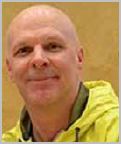
Terry Schenkel

BY TERRY SCHENKEL

Many families are aware of the Family Support and Advocacy program offered by the Developmental Disabilities Association (DDA) but there are some who have no idea we exist or what the program offers.

However, once the family gets connected with a family support worker and realize there are available resources for their child, their usual reaction is, “If I had connected with you even earlier, our journey would be much easier. Thank you so much!”

So, how and when would a family member benefit from the Family Support and Advocacy program?

  • At times of transition in their child’s life like preschool to kindergarten, elementary to high school, high school to college. Sandy was thankful for family support during the transition of her young son with severe autism from private school to public school. We helped her to connect with professionals at the Vancouver School Board (VSB), accompanied her to meetings at the school, and made sure that her concerns were heard.
  • When they need to advocate for services or financial assistance. Janet asked for help advocating for more support for her son with autism at school. She was referred to the right people at the VSB and we helped her to write a request to them. We supported her to be a strong advocate for her son. She feels proud of herself for what she is doing for her child.
  • When they need to understand the school system, Community Living British Columbia, Ministry of Children and Family Development and Vancouver Coastal Health. Sam was relieved when we informed him that he is going to be involved in his daughter’s Individual Educational Plan team. We gave support by accompanying him to IEP meetings.
  • Connecting them to other community support services for day-to-day needs. Linda was concerned about her six-year-old daughter’s development and wondered about a possible diagnosis of autism. The family support worker referred her to Sunny Hill team for diagnostic assessment.
  • When they want to connect with another family who understands what they are experiencing. Jill was thankful that we connected her with another mom who has a child with an intellectual disability and comes from the same region in the Middle East. Being an immigrant with the same language and culture and having a child with special needs was a few things the two of them have in common.
  • When they want to suggest a workshop or speaker or learn about upcoming workshops. Parents at the Bollywood Maza parent support group were concerned with the transition of their children to high school, so we invited a special needs transition consultant and a resource teacher from the VSB to the parents’ group. The parents had an opportunity to ask questions and get first-hand information.
  • When they feel alone or unheard in their efforts to advocate for their child. Jane has been a strong advocate for her young son with an intellectual disability. But dealing with mental health issues herself, there are times when she feels overwhelmed. During these times she would sort out the conflicting priorities with us because she feels that we hear and support her without judgement.
  • Parent-to-Parent Support and Information groups in Vancouver and Richmond. “This is the only place that I don’t need to worry if my son (who has autism) is loud or is running in a circle … This is my break”, says one of our Vietnamese Family Support Group moms.
  • Respitality Program. Parents who are members of DDA and whose children receive our services may enjoy a complimentary overnight stay at a local hotel. All they need to do is to organize care for their children for the night.

DDA’s Family Support and Advocacy service is free and no referral is needed. Just pick up the phone and dial 604-301-2831 for Michael, who supports families with children, or 604-233-5433 for Terry, who supports families with youth and adults.

The Developmental Disabilities Association is a nonprofit organization that began in 1952. Today, DDA offers more than 50 programs that support infants, children and adults diagnosed with a developmental disability and their families. DDA has a team located at at Kaslo Street and East 18th Avenue in the Renfrew-Collingwood neighbourhood. Their Infant Development Program, children’s and adult respite program, Youth in Transition, Family Support and Advocacy and host family program are located here.

Terry Schenkel is the assistant director of family support services at the Developmental Disabilities Association.

Copyright (c) 2016 Renfrew-Collingwood Community News


Leave a comment

BC annual food gathering 2016: Working for safe and sustainable food

BY JULIE TO

Youth share their stories at the 2016 BC Food Systems Network Gathering. Photo by Stephanie Lim

Youth share their stories at the 2016 BC Food Systems Network Gathering. Photo by Stephanie Lim

The BC Food Systems Network Gathering is held every year in different parts of B.C. to bring together speakers, activists and people who are generally interested in the food movement. This is a crucial gathering because it is a chance to address all of the injustices that should be talked about but are not.

It’s a great time for people to come together and share ideas, experiences and suggestions to make the food system more sustainable and safe for us and the future generations. People involved in events and organizations regarding food and food systems come together, greet old friends, meet new ones and all in all have a good time.

Youth take a break at the campsite. Photo by Kaitlyn Fung

Youth take a break at the campsite. Photo by Kaitlyn Fung

The gathering was held in Penticton (Syilx territories) this summer, at the En’owkin Centre, which provides schooling for indigenous children and youth to learn and connect with their history and keep their traditions and language alive.

This is the second year that youth working with Collingwood Neighbourhood House and the Food Security Institute attended the gathering. This year, students from Windermere Secondary and Vancouver Technical as well as older youth (neighbourhood house staff and volunteers) who are dedicated, passionate and willing to learn more about food systems began meeting about four months prior to the food gathering to prepare for our youth panel.

We were sharing personal stories on this panel. These stories were all in relation to food and how we personally felt connected it. Some shared stories about garden clubs, the difference of how they thought of food when they were younger versus their relationship with it now, funny food stories, and even about family members and their habits.

The stories ranged from humorous, sad and joyful experiences we had encountered  with or around food. The cool thing about this presentation was that it started off with the youngest person in the group (14 years old) and ended with the oldest (32 years old). This organization really showed the growth of intelligence, knowledge and passion of each individual.

The conference was filled with joyous moments and memories that will stay with all of us youth for a long time.  This experience was one of the best things I participated in this summer because of all the people I met and all the knowledge I learned.

Food systems are an important aspect of our day-to-day lives and with the advocates, activists and the supporters who want to make our food “secure,” we can achieve a better food system in our communities.

Julie To is a gardener, book lover and youth dedicated to food security. She will be entering Grade 10 at Vancouver Technical in the fall, where she is co-president of the garden club. She has spent her summer working with the Fresh Roots Sustainable Opportunities for Youth Leadership (SOYL) program.

Copyright (c) 2016 Renfrew-Collingwood Community News


Leave a comment

Still Creek restoration aims to bring back salmon for good

BY EMILY DOYLE-YAMAGUCHI

Still Creek made history in 2012 when salmon defied the odds to navigate deep within the boundaries of Metro Vancouver and spawned here for the first time in over 80 years.

This breakthrough, hailed as a small but iconic victory for the entire region, proved what many thought impossible: even partially buried waterways with an intensive urban-industrial history can be recovered to the point where a variety of life returns. But can this hopeful glimmer of salmon be encouraged to stay for good?

Recent water quality improvements in Still Creek, and the addition of fish ladders that help make passage possible, have enabled a small group of chum salmon to reappear in their historic breeding grounds in East Vancouver. These resilient fish made a harrowing journey in the dark beneath major roadways to achieve their destination.

Two laneways - Still Creek

A tale of two laneways: Wall-to-wall asphalt (top photo) concentrates water and pollutants in the watershed, raises water temperature to levels that threaten fish survival, and increases the risk of flooding and pollution of Still Creek and the neighbourhoods that form the watershed. The materials used in the country lane (bottom photo) allow water to filter into the ground and move through soil, resulting in a low risk of flooding and cool water, which is vital for salmon survival, reaching Still Creek. The grass and other plants growing here also help to keep the environment cooler and provide food and habitat for birds and insects. Photos by Herb Hammond, Silva Forest Foundation

Now a bold vision is emerging to shift from a piecemeal to a systematic restoration of the Still Creek watershed, which is required to make a suitable home for an ongoing, and increasing, salmon population in the future.

What is a watershed?
A watershed is a drainage basin, like your bathroom sink, where water collects from rain and snow, and drains into a central location—in this case, Still Creek. The Still Creek watershed is part of the larger Brunette River watershed, which is part of an even bigger Fraser River watershed, which connects to the global watershed through the Pacific Ocean.

Salmon travel to Still Creek from the ocean by first swimming through the Fraser River, then up the Brunette River and into Burnaby Lake. The boundary of a watershed is defined by the shape of the landscape—high points mark the boundaries between different watersheds. Big watersheds are made up of many smaller watersheds.

What will restoration look like?
Much of the watershed’s natural water flow has been significantly modified with urban development. Restoring natural water flow as much as possible will be an important part of restoring the watershed—from improving water quality for salmon to providing habitat for native songbirds.

We can do this by changing impermeable surfaces to permeable surfaces, such as rain gardens and bioswales, to collect water and permit it to drain into the soil at a more natural pace. Multi-layered trees and shrubs act like a leaky umbrella in a rainstorm, allowing the water to drain into the soil slowly and tempering the impact of extreme storms that accompany climate change. This “green infrastructure” works better than storm water pipes to manage rainwater.

Who is running the project and how can I get involved?
The Still Moon Arts Society, Silva Forest Foundation, Simon Fraser University, the Greenest City Fund and the Charles & Lucille Flavelle Family Fund held at the Vancouver Foundation have teamed up to provide the science, funding and community vision that are required to restore the ecological health of Still Creek.

Working with residents, students, artists and the City of Vancouver, the project partners are developing a watershed-wide restoration plan that ranges from collaborating with local schools and “rewilding” city parks, to creating rain gardens and mini-rainforests in private yards.

To learn more about local restoration
Join the email list for updates and event info mail@stillmoon.org. Follow @stillmoonarts and on Facebook. Come to a workshop and tell Still Moon what you know about the watershed and learn about important restoration efforts you can initiate on your own property. Workshop information will be announced in the fall.

Emily Doyle-Yamaguchi is the project coordinator for the Still Creek ecosystem-based restoration plan. She may be reached at emily@silvafor.org.

Copyright (c) 2016 Renfrew-Collingwood Community News