Renfrew-Collingwood Community News

News stories from the Renfrew-Collingwood community in East Vancouver


1 Comment

3 easy tips to get your lawn and garden going this spring

Topdress-lawn

The new soil from topdressing will integrate itself into the existing material in a matter of weeks, and your lawn will thank you for it. Photos by Julie Cheng

BY SOREN ELSAY

The long-awaited end to winter is finally upon us and with it comes a fresh start for your lawn and garden. Whether you loved your garden and lawn last year or would rather forget that aspect of 2017, spring is the ideal time to set yourself up for a successful green season.

While the warming weather might seem like enough to get your lawn and garden going, there are a handful of things you can do to set yourself up for a satisfying year in your own personal green space.

Topdress your lawn and garden

Topdressing is the act of adding fresh (preferably richly composted) soil to both your lawn and garden. The best part of topdressing is how easy it is to do.

For your lawn, simply apply a thin, roughly half-inch layer evenly on top of your grass. Once applied, simply let it slowly consolidate into the existing soil layer. It may be visually jarring when you first see your nice green lawn coated in composted soil, but fear not, the new soil will integrate itself into the existing material in a matter of weeks, and your lawn will thank you for it.

In your garden, apply the fresh soil by digging down  four to six inches into your existing garden bed and blend your old soil with the new, composted material.

For both the lawn and garden, the topsoil will give a much-needed nutrient boost after the long winter.

Aerate your lawn
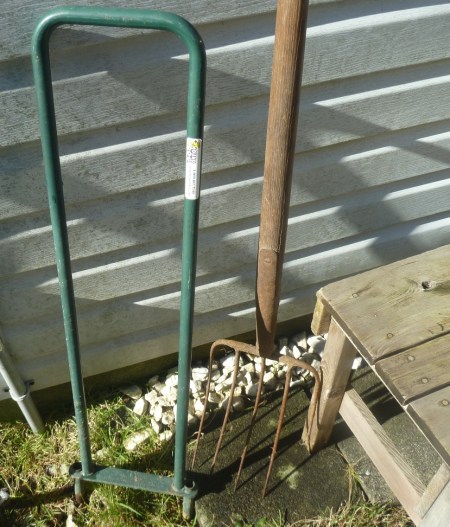
Manual aerating tools

Manual aerating tools. The holes from aerating allow nutrients from both the air and from moisture to penetrate your lawn with more ease.

Filed into the landscaping category of “short-term hit in exchange for long-term gain,” aerating your lawn will do wonders for your grass later in the season.

While there are a number of techniques for aerating a lawn, the basic premise is the same: puncturing holes in the ground in order to improve circulation amongst the roots. By breaking up the ground, these holes allow nutrients from both the air and from moisture to penetrate your lawn with more ease.

The most common machine used for this procedure is an aerator, which resembles a snowblower but instead of spitting snow, pulls out four-to-six-inch plugs of lawn and leaves them behind. If you don’t want to rent an aerator, or are looking for a new workout fad, pitchforks have been known to work as well, though at a much less efficient pace.

If you are planning on topdressing your lawn as well, make sure to aerate first before laying on the topsoil layer. The aeration will allow for quicker and easier absorption of the new soil.

Plant new or transplant

Although Vancouver has the reputation as a wet city, the rainfall that we receive in the non-winter months is actually significantly less than your garden needs. That is why the spring is ideal for both planting new items as well as transplanting existing ones to another spot in your garden. Once the summer rolls around, keeping the ground moist enough for a freshly installed plant to thrive is very tough, so take advantage of still-wet conditions before it’s too late.

When it comes to transplanting, always make sure to fill the new hole fully with water and then let it drain before putting the plant in the ground. This will ensure that the roots will remain hydrated while they are disturbed and at their most vulnerable. Continued watering after a transplant is also key to ensure a smooth transition.

Soren Elsay is a Vancouver-based professional landscaper. He is an aspiring writer with a bachelor of arts from the University of British Columbia.

Copyright (c) 2018 Renfrew-Collingwood Community News


Leave a comment

Seniors and income tax filing in B.C.

Income-tax-time

Collingwood Neighbourhood House is once again offering its income tax service for low-income households.

BY KAREN LOK YI WONG

Filing income tax is important for everyone in B.C. However, it can be challenging for some groups, including seniors.

Why is it important for seniors to file income tax?
Seniors generally have low income. According to the Canadian Centre for Policy Alternatives, “a large share of single seniors has incomes very close to the poverty line: 44 per cent report an after-tax income between $15,000 and $25,000.”

By filing income tax, seniors are more likely to get the tax credits and benefits they are entitled to, such as Goods and Services Tax (GST) credits and the Guaranteed Income Supplement. If they do not file income tax, these tax credits and benefits will be cut.

To many seniors, these tax credits and benefits are survival income. Seniors rely on their limited income to pay for daily necessities, such as rent and food, to survive. These basic necessities are important for seniors to maintain their physical, mental and socio-emotional health.

What are the challenges for seniors to file income tax?
According to my own experience working with seniors, many do not know how to file income tax. The Canada Revenue Agency encourages income tax filing by computer. However, many seniors have limited or no knowledge of the computer.

While income tax can also be filed by paper, many find the form booklet complicated or cannot fill it in because of different reasons. For example, they have poor vision and can’t read the form, or their hands shake when writing so they can’t fill in the form. They may turn to family and friends for help, but many do not have this option for support. They may consider paying for an income tax filing service, but many find the service is too expensive.

What is the Community Volunteer Income Tax Program
Seniors and other people who have a modest income and a simple tax situation can consider filing their income tax with the help of the Community Volunteer Income Tax Program (CVITP), which is supported by the Canada Revenue Agency (CRA).

Through this program, community organizations across Canada help you fill out and file income tax for free. Some organizations provide the service year-round, but most only during the income tax filing seasons in March and April. The service is provided by volunteers who are either trained or have related education already, like accountants.

What are the challenges for seniors to access the CVITP?
It can still be challenging for some seniors to access the Community Volunteer Income Tax Program. First, in many community organizations, there are more clients than volunteers can serve. The resulting long waits can challenge some seniors, who may feel fatigued. It’s a good idea to provide tea, coffee, water and cookies to seniors while waiting.

Second, because many seniors can’t travel to the income tax clinics, community organizations often provide outreach services. However, not many organizations have the volunteer resources to provide such outreach.

Third, many immigrant seniors do not speak Canada’s official languages, English and French. Community organizations may have volunteers who can provide interpretation services but not many have the language resources. Community organizations and the Canada Revenue Agency should continue to consider ways to improve the program.

To find a Community Volunteer Income Tax Program, visit the CRA website http://www.cra-arc.gc.ca/tx/ndvdls/vlntr/clncs/vancouver-bc-eng.html.

Karen Lok Yi Wong is a social worker in B.C. working with seniors. She was the program coordinator at 411 Seniors Centre Society http://411seniors.bc.ca and lead the centre’s Community Volunteer Income Tax Program in 2017. That year, the program served more than 1,700 clients.

Copyright (c) 2018 Renfrew-Collingwood Community News

Leave a comment

City plans housing for homeless residents at 4410 Kaslo

TMH-4410-Kaslo

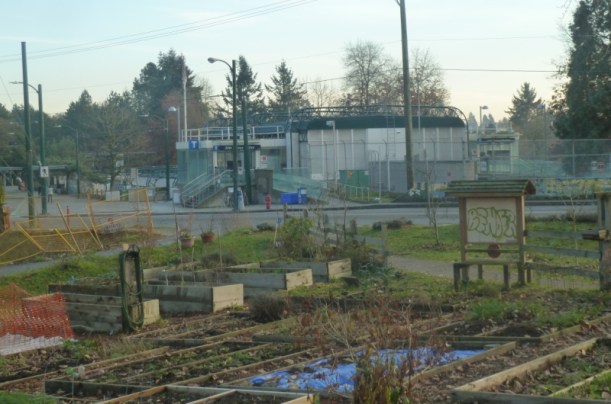
The paths around the current garden at 4410 Kaslo are heavily used by commuters as a thoroughfare to the 29th Avenue SkyTrain station and bus loop. Photos by Julie Cheng

Community garden near the 29th Avenue SkyTrain station slated to become Vancouver’s latest site for temporary modular housing

BY JULIE CHENG

Dec. 13, 2017, local residents packed the First Hungarian Presbyterian Church in the first of two information sessions to find out more about the temporary modular housing that the City of Vancouver has planned for 4410 Kaslo Street.

Currently a community garden, 4410 Kaslo is located across from the 29th Avenue SkyTrain station and Slocan Park. One three-storey building with 50 units is being considered there as housing for people experiencing homelessness.

Kaslo is the city’s fourth site planned for such housing, following sites in the Marpole neighbourhood and on Franklin and Powell streets in the Downtown Eastside.

Together the four sites make up roughly 200 out of the 600 new units of temporary modular housing that the city aims to place across Vancouver. The city is working on six to seven more sites, according to Abi Bond, director of affordable housing community services.

TMH-community-info-session-2017-12-13

Jennifer Gray-Grant of the Collingwood Neighbourhood House and Chris Taulu of Collingwood Community Policing Centre were among the many community members who attended the 4410 Kaslo information sessions.

Vancouver’s first temporary modular housing at 220 Terminal Avenue opened in February 2017 and has been a “big success,” says Luke Harrison, CEO of the Vancouver Affordable Housing Agency. “It’s operating beautifully. There’s been no increase in crime. The residents have been good neighbours.”

Staff from Atira Women’s Resources Society will manage the Kaslo site and will connect its residents to support services such as health services.

Development permit timeline

December 13 and 14, 2017: Community information session to present project and gather feedback.

December 22, 2017: Public can provide input until December 22 via email (housing@vancouver.ca) or at the community information sessions.

January 2018: Vancouver Affordable Housing Agency applies for a development permit to build temporary modular housing at 4410 Kaslo Street.

January to February 2018: City and community partners hold another community information session to present the project and listen to feedback. Public has the opportunity to provide input for one week after the community information session via email (housing@vancouver.ca) or at the community information session.

February 2018: The city’s director of planning determines whether a development permit will be issued.

Spring 2018: Once approved, it takes about three months for construction to be completed.

For more information visit Vancouver.ca/temporarymodularhousing.

Current City of Vancouver temporary modular housing projects

Franklin Street – 39 units on a 18,913 square-foot lot

Powell Street – 39 units on a 21,203 square-foot lot

Marpole – 2 buildings of 39 units; total 78 units on a 65,198 square-foot lot

Kaslo Street – 50 units on a 20,139 square-foot lot

The building sizes for Franklin, Powell and Marpole are about 15,000 square feet for each 39-unit structure, according to Luke Harrison of the Vancouver Affordable Housing Agency. The building planned for Kaslo would be closer to 25,000 square feet.

Did you know?
The 2017 Homeless Count in Metro Vancouver reports more than 2,100 people living in homeless shelters or on the street within Vancouver.