Renfrew-Collingwood Community News

News stories from the Renfrew-Collingwood community in East Vancouver


Leave a comment

Cambodia

Cambodia Robert Edwards

Photos courtesy of Robert F. Edwards

BY ROBERT F. EDWARDS

My dear friends and readers, I would like to share with you my visit once again to Cambodia. This time I was not travelling alone as a single backpacker, but was with a group of well-established charity organizations. One charity was the Developing World Connections, and the other a worldwide organization known as World Vision.

To commemorate the 20-year anniversary of the Renfrew-Collingwood Community News, we’re revisiting past stories that have particularly inspired us.
Among our ongoing contributors over the years has been the very personable Robert F. Edwards, who wrote engaging stories, offered his opinions and educated readers on various topics. The personal accounts of his travels around the world through his charity work has been inspiring. This particular story from July 2013 stood out for me as Robert talked about his experiences working with aid organizations to influence communities and bring personal joy to his own life. ─ Lisa Symons, sales and distribution

During my time spent with Developing World Connections, I had the opportunity and privilege of working alongside tradesmen and farmers in the southern part of Cambodia around Kep. This area, like most of Cambodia, is extremely poor and the farmers have no electricity or toilet facilities, just to mention a few things which they lack. Developing World Connections built not only two latrines but then went on for an irrigation system and completed smaller diversions to irrigate fields for the crops that are desperately needed. One of the most important of these crops is rice. It was a wonderful experience to help these farmers have a better life in the bare essentials that we take for granted.

The second part of my trip was equally, if not more, rewarding for me personally. I was given the opportunity by World Vision to visit four of my sponsored children in Cambodia. Along with this opportunity, I also shared some of the remarkable things that World Vision is doing. One was going to a school and talking to over 300 children about Canada. This general area has over 2,400 sponsored children through World Vision.

My most important part of my visit to Cambodia was to visit my wonderful sponsored children and their siblings as well as the mothers. My first child was from a district that the mother and daughter had to travel on one bicycle over eight kilometres with the temperature exceeding 34°C. I had a wonderful time (through an interpreter) sharing these precious moments with this wonderful girl and her mother. It made all of us realize and especially me this precious young girl was not just a face on a photograph.
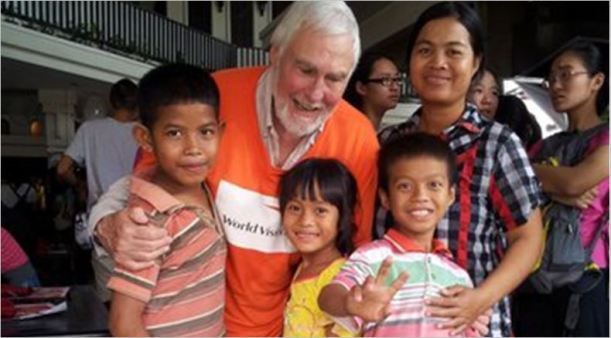
Cambodia 2 Robert EdwardsIn the following days, thanks again to World Vision’s help, I visited my other three sponsored children who are much younger. The mothers and the siblings of these three children accompanied them on a long journey from one of the outposts in the district that World Vision was operating.

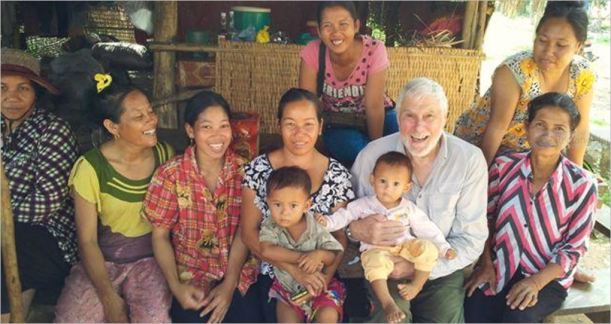
After sharing a considerable time with some things that I’d brought from Canada, the three children along with their mothers and siblings and World Vision personnel with myself all went to a Chinese smorgasbord. It was here when we sat down and started to enjoy the food that one of the World Vision’s personnel said to me, “you have a large family.”

We all had a good laugh for I lost count of how many children along with the three mothers were gathered around me. Walking up to the buffet, the little girl grabbed my hand and the little boy took my other hand and led the way. I truly felt not as a sponsor but as a grandfather enjoying my grandchildren.

The reason I’ve written this is not only to share sponsorships but relationships. Though these children and their parents were unable to communicate on a common language, we shared the most important thing that people can share in their lives together: happiness and love from all that were present.

Robert F. Edwards is a local resident who sometimes writes for the RCC News as The Other Guy’s Opinion.

Copyright (c) 2018 Renfrew-Collingwood Community News


Leave a comment

Family tree tips for creating a memory box

Loretta Houben created this memory box as a tribute to her grandma Helen.

Loretta Houben created this memory box as a tribute to her grandma Helen.

BY LORETTA HOUBEN

A fun way to keep your family history alive is to create a memory box. Many sizes of boxes are available and can be purchased from Michael’s craft stores, Dollarama or Winner’s Homesense. They range in price from $3 to $25.

The focal point of the box could be a favourite photo or a personal keepsake. In my case I chose the earliest photo available of my maternal grandma, Helen Brutke. She was a talented seamstress so I lined the back of the box with fabric similar to the era in which she did most of her sewing.

I glued the fabric to the back of the box and added lace, which I had purchased years ago at my grandma’s favourite fabric store in Salem, Oregon. I included vintage buttons and a scrap of antique lace from her button box.

I played around with where to place the framed photo and the other items, and had fun while doing so! Whenever I look at this special memory box, I wish I had been able to know Grandma Helen, but she died when I was 10 days old. In this way I can’t forget her, thankful that I inherited her love of sewing.

A memory box also makes a wonderful gift for a loved one. (Remember Mother’s Day is on May 11th!) For my dad’s 80th birthday I bought a large box and included photos from all decades of his life, embellished the photos with scrap book images from the dollar store, and used coloured lettering from Michael’s craft store. It was fun to choose the pictures that represented his long life.

This year I’m working on a very special project to celebrate the upcoming First World War centenary. My great uncle, William Williams, who I wrote about in the April 2014 Renfrew-Collingwood Community News Family Tree Tips article, died after being wounded in battle in Salonika, Greece in 1917.

I plan to use a larger memory box and include a photo, a copy of his war medal card, photo copies of Salonika, a photocopy of the newspaper clipping describing his bravery in battle, and possibly his original war medal which was sent to his family after his death. (If I can coerce it from my dad’s possession.)

Visual mementos are a lovely way to keep the memory of our relatives alive, especially if they lived long ago or are ones you never met. Younger generations will appreciate the care and thought which went into making them, and one day they will be precious family heirlooms.

Next month’s installment will focus on searching old journals or diaries, notebooks and even receipts for family clues.

Loretta Houben is a member of the British Columbia Genealogy Society and enjoys finding ways to keep her family history alive and well. Please check the society’s website at www.bcgs.ca for free meet-ups once a month. First published in the May 2014 issue of the Renfrew-Collingwood Community News.

Copyright (c) 2018 Renfrew-Collingwood Community News


1 Comment

3 easy tips to get your lawn and garden going this spring

Topdress-lawn

The new soil from topdressing will integrate itself into the existing material in a matter of weeks, and your lawn will thank you for it. Photos by Julie Cheng

BY SOREN ELSAY

The long-awaited end to winter is finally upon us and with it comes a fresh start for your lawn and garden. Whether you loved your garden and lawn last year or would rather forget that aspect of 2017, spring is the ideal time to set yourself up for a successful green season.

While the warming weather might seem like enough to get your lawn and garden going, there are a handful of things you can do to set yourself up for a satisfying year in your own personal green space.

Topdress your lawn and garden

Topdressing is the act of adding fresh (preferably richly composted) soil to both your lawn and garden. The best part of topdressing is how easy it is to do.

For your lawn, simply apply a thin, roughly half-inch layer evenly on top of your grass. Once applied, simply let it slowly consolidate into the existing soil layer. It may be visually jarring when you first see your nice green lawn coated in composted soil, but fear not, the new soil will integrate itself into the existing material in a matter of weeks, and your lawn will thank you for it.

In your garden, apply the fresh soil by digging down  four to six inches into your existing garden bed and blend your old soil with the new, composted material.

For both the lawn and garden, the topsoil will give a much-needed nutrient boost after the long winter.

Aerate your lawn

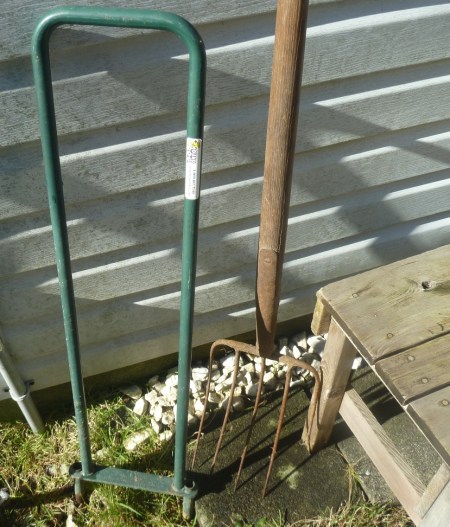
Manual aerating tools

Manual aerating tools. The holes from aerating allow nutrients from both the air and from moisture to penetrate your lawn with more ease.

Filed into the landscaping category of “short-term hit in exchange for long-term gain,” aerating your lawn will do wonders for your grass later in the season.

While there are a number of techniques for aerating a lawn, the basic premise is the same: puncturing holes in the ground in order to improve circulation amongst the roots. By breaking up the ground, these holes allow nutrients from both the air and from moisture to penetrate your lawn with more ease.

The most common machine used for this procedure is an aerator, which resembles a snowblower but instead of spitting snow, pulls out four-to-six-inch plugs of lawn and leaves them behind. If you don’t want to rent an aerator, or are looking for a new workout fad, pitchforks have been known to work as well, though at a much less efficient pace.

If you are planning on topdressing your lawn as well, make sure to aerate first before laying on the topsoil layer. The aeration will allow for quicker and easier absorption of the new soil.

Plant new or transplant

Although Vancouver has the reputation as a wet city, the rainfall that we receive in the non-winter months is actually significantly less than your garden needs. That is why the spring is ideal for both planting new items as well as transplanting existing ones to another spot in your garden. Once the summer rolls around, keeping the ground moist enough for a freshly installed plant to thrive is very tough, so take advantage of still-wet conditions before it’s too late.

When it comes to transplanting, always make sure to fill the new hole fully with water and then let it drain before putting the plant in the ground. This will ensure that the roots will remain hydrated while they are disturbed and at their most vulnerable. Continued watering after a transplant is also key to ensure a smooth transition.

Soren Elsay is a Vancouver-based professional landscaper. He is an aspiring writer with a bachelor of arts from the University of British Columbia.

Copyright (c) 2018 Renfrew-Collingwood Community News