Renfrew-Collingwood Community News

News stories from the Renfrew-Collingwood community in East Vancouver


Leave a comment

BC annual food gathering 2016: Working for safe and sustainable food

BY JULIE TO

Youth share their stories at the 2016 BC Food Systems Network Gathering. Photo by Stephanie Lim

Youth share their stories at the 2016 BC Food Systems Network Gathering. Photo by Stephanie Lim

The BC Food Systems Network Gathering is held every year in different parts of B.C. to bring together speakers, activists and people who are generally interested in the food movement. This is a crucial gathering because it is a chance to address all of the injustices that should be talked about but are not.

It’s a great time for people to come together and share ideas, experiences and suggestions to make the food system more sustainable and safe for us and the future generations. People involved in events and organizations regarding food and food systems come together, greet old friends, meet new ones and all in all have a good time.

Youth take a break at the campsite. Photo by Kaitlyn Fung

Youth take a break at the campsite. Photo by Kaitlyn Fung

The gathering was held in Penticton (Syilx territories) this summer, at the En’owkin Centre, which provides schooling for indigenous children and youth to learn and connect with their history and keep their traditions and language alive.

This is the second year that youth working with Collingwood Neighbourhood House and the Food Security Institute attended the gathering. This year, students from Windermere Secondary and Vancouver Technical as well as older youth (neighbourhood house staff and volunteers) who are dedicated, passionate and willing to learn more about food systems began meeting about four months prior to the food gathering to prepare for our youth panel.

We were sharing personal stories on this panel. These stories were all in relation to food and how we personally felt connected it. Some shared stories about garden clubs, the difference of how they thought of food when they were younger versus their relationship with it now, funny food stories, and even about family members and their habits.

The stories ranged from humorous, sad and joyful experiences we had encountered  with or around food. The cool thing about this presentation was that it started off with the youngest person in the group (14 years old) and ended with the oldest (32 years old). This organization really showed the growth of intelligence, knowledge and passion of each individual.

The conference was filled with joyous moments and memories that will stay with all of us youth for a long time.  This experience was one of the best things I participated in this summer because of all the people I met and all the knowledge I learned.

Food systems are an important aspect of our day-to-day lives and with the advocates, activists and the supporters who want to make our food “secure,” we can achieve a better food system in our communities.

Julie To is a gardener, book lover and youth dedicated to food security. She will be entering Grade 10 at Vancouver Technical in the fall, where she is co-president of the garden club. She has spent her summer working with the Fresh Roots Sustainable Opportunities for Youth Leadership (SOYL) program.

Copyright (c) 2016 Renfrew-Collingwood Community News


Leave a comment

Still Creek restoration aims to bring back salmon for good

BY EMILY DOYLE-YAMAGUCHI

Still Creek made history in 2012 when salmon defied the odds to navigate deep within the boundaries of Metro Vancouver and spawned here for the first time in over 80 years.

This breakthrough, hailed as a small but iconic victory for the entire region, proved what many thought impossible: even partially buried waterways with an intensive urban-industrial history can be recovered to the point where a variety of life returns. But can this hopeful glimmer of salmon be encouraged to stay for good?

Recent water quality improvements in Still Creek, and the addition of fish ladders that help make passage possible, have enabled a small group of chum salmon to reappear in their historic breeding grounds in East Vancouver. These resilient fish made a harrowing journey in the dark beneath major roadways to achieve their destination.

Two laneways - Still Creek

A tale of two laneways: Wall-to-wall asphalt (top photo) concentrates water and pollutants in the watershed, raises water temperature to levels that threaten fish survival, and increases the risk of flooding and pollution of Still Creek and the neighbourhoods that form the watershed. The materials used in the country lane (bottom photo) allow water to filter into the ground and move through soil, resulting in a low risk of flooding and cool water, which is vital for salmon survival, reaching Still Creek. The grass and other plants growing here also help to keep the environment cooler and provide food and habitat for birds and insects. Photos by Herb Hammond, Silva Forest Foundation

Now a bold vision is emerging to shift from a piecemeal to a systematic restoration of the Still Creek watershed, which is required to make a suitable home for an ongoing, and increasing, salmon population in the future.

What is a watershed?
A watershed is a drainage basin, like your bathroom sink, where water collects from rain and snow, and drains into a central location—in this case, Still Creek. The Still Creek watershed is part of the larger Brunette River watershed, which is part of an even bigger Fraser River watershed, which connects to the global watershed through the Pacific Ocean.

Salmon travel to Still Creek from the ocean by first swimming through the Fraser River, then up the Brunette River and into Burnaby Lake. The boundary of a watershed is defined by the shape of the landscape—high points mark the boundaries between different watersheds. Big watersheds are made up of many smaller watersheds.

What will restoration look like?
Much of the watershed’s natural water flow has been significantly modified with urban development. Restoring natural water flow as much as possible will be an important part of restoring the watershed—from improving water quality for salmon to providing habitat for native songbirds.

We can do this by changing impermeable surfaces to permeable surfaces, such as rain gardens and bioswales, to collect water and permit it to drain into the soil at a more natural pace. Multi-layered trees and shrubs act like a leaky umbrella in a rainstorm, allowing the water to drain into the soil slowly and tempering the impact of extreme storms that accompany climate change. This “green infrastructure” works better than storm water pipes to manage rainwater.

Who is running the project and how can I get involved?
The Still Moon Arts Society, Silva Forest Foundation, Simon Fraser University, the Greenest City Fund and the Charles & Lucille Flavelle Family Fund held at the Vancouver Foundation have teamed up to provide the science, funding and community vision that are required to restore the ecological health of Still Creek.

Working with residents, students, artists and the City of Vancouver, the project partners are developing a watershed-wide restoration plan that ranges from collaborating with local schools and “rewilding” city parks, to creating rain gardens and mini-rainforests in private yards.

To learn more about local restoration
Join the email list for updates and event info mail@stillmoon.org. Follow @stillmoonarts and on Facebook. Come to a workshop and tell Still Moon what you know about the watershed and learn about important restoration efforts you can initiate on your own property. Workshop information will be announced in the fall.

Emily Doyle-Yamaguchi is the project coordinator for the Still Creek ecosystem-based restoration plan. She may be reached at emily@silvafor.org.

Copyright (c) 2016 Renfrew-Collingwood Community News


Leave a comment

Farm markets in Renfrew-Collingwood

RCC News River District Farmers Market Romers

Stay for a meal at Romer’s Burger Bar and enjoy the waterfront, playground and pier after a stop at the River District Farmers Market. Photos by Julie Cheng

BY JULIE CHENG

There’s nothing like the taste and nutrition of fresh fruits and vegetables picked at the peak of the season. Summer is a great time to take advantage of local-grown fruits and veggies found at various farmers markets and market stalls around our neighbourhood.

Whether you walk, bike or Skytrain, the trip will be well worth the effort!

Windermere Garden Market

Tuesdays (July 12 – end of August)

Time: 11:00 am–2 pm

Location: In front of Collingwood Neighbourhood House, 5288 Joyce Street

Students from Windermere Secondary School’s Organic Garden are offering their fresh and organic produce to the community! Pick up local veggies and support Windermere students.

Curbside Fresh Market

Thursdays (until September 29)

3–6 pm

In front of Collingwood Neighbourhood House, 5288 Joyce Street

Curbside Fresh Market, a project of the Greater Vancouver Food Bank, sells locally grown, lower-priced, fresh produce and market staples at Collingwood Neighbourhood House on Thursdays. Buy from a selection of in-season fruits and veggies, including tomatoes, lettuce, carrots, peaches, cherries, apples and more!

MERCATO Italian Market

Friday, August 19

Friday, November 25

4-8 pm

3075 Slocan Street and Grandview Highway

The city’s only Italian market is right in our backyard! This unique market brings together the tastes of Italy with the produce grown in local farms. Shop for fresh fruit and veggies, hand-made products and delicious food prepared by Il Centro’s chef.

RCC News River District Fraser View

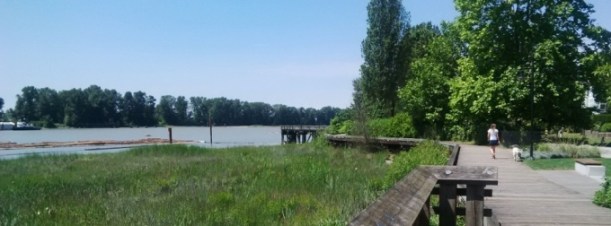
Enjoy a leisurely walk and a spectacular view from the view just off the River District Farmers Market.

River District Farmers Market

Saturdays until October 15

10 am-3 pm

Kerr Street Plaza – 8683 Kerr Street

One block South of SE Marine Drive

This is the only riverfront market in Vancouver. Shop for fruits and vegetables, prepared foods, and hand-made products produced by farmers and artisans. Stay for live music, a delicious meal at Romer’s Burger Bar and enjoy the waterfront, playground and pier. If you live nearby, please consider walking or biking.

Trout Lake Market

Saturdays until October 19

9 am to 2 pm

North parking lot of Trout Lake (John Hendry Park)

One of the longest-running and most popular markets in Vancouver, Trout Lake Market is always jam-packed. There are often lineups for the food trucks such as Vij’s Railway Express.

But it’s not all about food. The scene is colourful and festive with musicians playing and face-painting for kids and kids at heart. In addition to the fresh produce, from apples and peaches to beets and turnips, you can pick up fresh-baked bread and pies, meat and cheese, salmon and free-range chicken, and lots more. If it’s organic, even better!

Skytrain stop: Nanaimo station.

Downtown Market at Queen Elizabeth Theatre

Thursdays until October 27

2-6 pm

Queen Elizabeth Theatre Plaza

650 Hamilton Street, Vancouver

If you’re downtown you can shop fresh weekly for quality fresh fruits and vegetables, meat, eggs and poultry, baked goods, artisan food and craft, fresh fish, and local craft beer, wine and spirits.

Or take the Skytrain to the Chinatown-Stadium station and head down Beatty Street and turn west on Georgia Street.

Before the market, grab some lunch and head across Georgia Street to the CBC and take in the sounds of summer at CBC’s Musical Nooners. These free, live music concerts run every weekday on the CBC Vancouver outdoor stage on Hamilton Street (between West Georgia and Robson), Monday to Friday from 12-1 pm.

Julie Cheng is the editor of the Renfrew-Collingwood Community News. She tries to purchase fresh local produce whenever possible.

Copyright (c) 2016 Renfrew-Collingwood Community News