Renfrew-Collingwood Community News

News stories from the Renfrew-Collingwood community in East Vancouver


Leave a comment

Read On: Beating the winter blues

BY TONY WANLESS

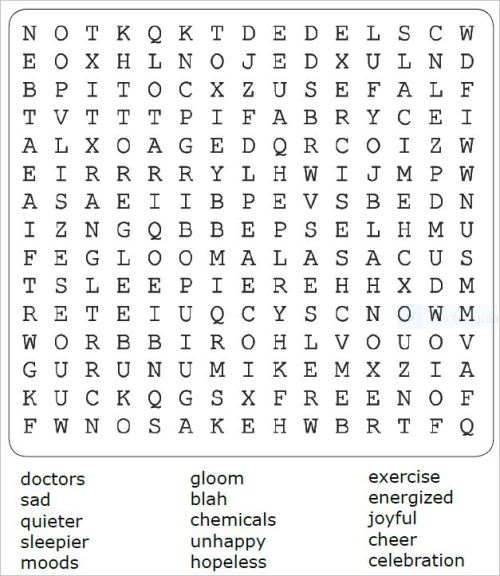
Doctors have long understood that, in these months, most people begin to feel sad, less energetic, quieter and, often, sleepier.

Our moods aren’t as cheerful as they were in the summer. Life seems more difficult. Happiness has gone.

In Vancouver, this end-of-the-year sadness is stronger. The dark, cold, rainy days and constant gloom make many people feel tired and glum.

These feelings are often called the “blahs” or “The Blues” – like in the songs about trouble and heartache.

Because our bodies need light to create the chemicals in our brains that make us happy or energetic, we often feel sad and unhappy, more tired, and, sometimes, hopeless, in the darkest times of the year.

But not everyone is affected by the year-end blues. Some people live through the period with few problems while others are so sad they want to pull a blanket over their heads until springtime.

This last feeling is more formally termed seasonal affective disorder (SAD) – a form of mental illness caused by a lack of light.

Doctors say that the best way to survive the year-end months is by being involved in activities like exercise and spending more time with friends and family.

These keep you energized during the dark period. Joyful activities produce chemicals in the brain that make you happy and so help beat the blues.

Also, most religions have created something to help the (mostly western) world survive the blues.

It’s called Christmas, which began as a religious ceremony in much of the Northern world as a way to cheer up people in the darkest time of year. Now, it is almost a month-long celebration that makes us happier.

So have a merry, happy Christmas, everyone. And try to remain cheerful.

Definitions

disorder: a state of confusion
affected: acted upon; influenced
formally: in accordance with the rules of convention or etiquette
western: living in or originating from the west, in particular Europe or the United States


Leave a comment

Read On: Can you talk with someone without speaking?

Read On Word Search August 2018

Word Search: Body language

BY TONY WANLESS

Yes, you can.

When learning a language, it helps to know that there are other ways to “talk” with people without using your voice. Sign language, often used by those who can’t hear, is an example.

But the most common method is body language, which uses gestures or facial expressions to send information.

Although we mostly use speech for talking, we also use body language – much more than we realize. Often we combine the two for emphasis.

Body language is an ancient form of communication that is used by all animals, including human beings. It is commonly used to send messages to others without speaking or to amplify a spoken message.

Sometimes body language users don’t even know they are using it.

Have you ever waved goodbye to someone who is leaving? Stood tall when you were angry? Nodded your head to agree with someone? Used your hands to explain something?

You were “speaking” body language.

Most often, “talking” in body language is done with the head or the hands (or both).

But sometimes other body parts are used. Winking (closing and opening an eye quickly) to indicate a secret is one example.

Some body language is universal: A raised open hand is understood by most people to mean “stop” (but if it is softened or moved, it could also mean “Hello!”)

At other times, bowing your head is a sign of respect, nodding your head is a sign of agreement and shaking your head back and forth means no.

It can also be a sign of recognition, or a sign of acceptance.

Sometimes we move our heads to tell someone to move in a particular direction. Sometimes we only shift our eyes to signal they should look somewhere.

Opposite to this is the body language that shows anger or disapproval.

When angry, you may open your eyes and nostrils wide, or breath in deeply to fill your chest and appear “bigger” and more threatening.

Can you think of more examples of “body talking” from your country’s culture?

Definitions

gesture: the use of motions of the limbs or body as a means of expression
facial: of or relating to the face
emphasis: special consideration of or stress or insistence on something
amplify: to make larger or greater

Copyright 2018 Renfrew-Collingwood Community News


Leave a comment

Read On: Change those bad habits

Read-On-word-search-bad-habits

Word Search: Change Bad Habits

BY TONY WANLESS

Do you have bad habits that you want to change?

Of course you do.

Unless you’re some kind of superhuman, you probably have several.

Bad habits are those annoying actions or thoughts you repeat regularly, even though you might not want to. They could involve the way you handle finances, your thoughts, your behaviours and interactions with other people, and many more.

These habits prevent you from being what you want to be. They cause strife in your relationships with other people. They often impact your work because they are usually the opposite of what you should be doing.

It’s only human to have bad habits. But it’s also part of being human to want to change those habits because they have a large and negative affect on your personal and your financial life. We all want to be a better person, if not for ourselves, then for those around us.

But it is difficult to change habits, because they are caused by repeating behaviours. Habits are made because your brain, which always wants to make things easier, creates a separate thought channel – a type of mental shortcut – to make a behaviour require less thought. This saves energy, or brainpower.

The more you repeat the behaviour, the stronger that separate channel becomes. As a result, it becomes increasingly difficult to change the habit.

But psychiatrists have some suggestions.

7 tips to change bad habits

  1. Change one habit at a time. It takes some work, and if you try doing several, you’ll probably fail. On the other hand, changing one habit usually leads to changing others.
  2. Identify the habit you want to change. You may not even be aware that you have it.
  3. Think about the habit and what good (or bad) it is doing for you. If not enough good, then you have a reason to change it.
  4. Replace the habit with a different one. You probably already know what that could be.
  5. Understand that you’ll fail or forget sometimes. Don’t give in, just do it right the next time. Eventually, it will take.
  6. It’s a good idea to keep track of your efforts to change a habit in some kind of journal. You’ll notice that you are getting better at it over time.
  7. Recognize that you CAN develop a new habit. But it will take time and some effort.

Definitions

annoying: causing irritation
strife: bitter sometimes violent conflict
impact: to have a direct effect on
channel: a way, course, or direction of thought or action

Copyright 2018 Renfrew-Collingwood Community News