Renfrew-Collingwood Community News

News stories from the Renfrew-Collingwood community in East Vancouver


Leave a comment

Read On: Can you talk with someone without speaking?

Read On Word Search August 2018

Word Search: Body language

BY TONY WANLESS

Yes, you can.

When learning a language, it helps to know that there are other ways to “talk” with people without using your voice. Sign language, often used by those who can’t hear, is an example.

But the most common method is body language, which uses gestures or facial expressions to send information.

Although we mostly use speech for talking, we also use body language – much more than we realize. Often we combine the two for emphasis.

Body language is an ancient form of communication that is used by all animals, including human beings. It is commonly used to send messages to others without speaking or to amplify a spoken message.

Sometimes body language users don’t even know they are using it.

Have you ever waved goodbye to someone who is leaving? Stood tall when you were angry? Nodded your head to agree with someone? Used your hands to explain something?

You were “speaking” body language.

Most often, “talking” in body language is done with the head or the hands (or both).

But sometimes other body parts are used. Winking (closing and opening an eye quickly) to indicate a secret is one example.

Some body language is universal: A raised open hand is understood by most people to mean “stop” (but if it is softened or moved, it could also mean “Hello!”)

At other times, bowing your head is a sign of respect, nodding your head is a sign of agreement and shaking your head back and forth means no.

It can also be a sign of recognition, or a sign of acceptance.

Sometimes we move our heads to tell someone to move in a particular direction. Sometimes we only shift our eyes to signal they should look somewhere.

Opposite to this is the body language that shows anger or disapproval.

When angry, you may open your eyes and nostrils wide, or breath in deeply to fill your chest and appear “bigger” and more threatening.

Can you think of more examples of “body talking” from your country’s culture?

Definitions

gesture: the use of motions of the limbs or body as a means of expression
facial: of or relating to the face
emphasis: special consideration of or stress or insistence on something
amplify: to make larger or greater

Copyright 2018 Renfrew-Collingwood Community News


Leave a comment

August 2018 issue of RCC News is here

RCC News August 2018

Happy summer! This issue of the RCC News is full of the many wonderful people, events and programs happening in our neighbourhood.

Get your latest issue of the RCC News at your local coffee shop, grocery store, library and community centre.

Or click on the cover image to view the new issue.

In this issue:

  • Creative City Strategy — New arts opportunity for engagement
  • RCC News 20 years: Renfrew-Collingwood’s humble historic landmark by John Mendoza
  • Hairstyling for seniors at Collingwood Neighbourhood House
  • Remembering Chris Jamieson
  • How to design a bird-friendly garden
  • Report on Community Open House No. 1 for seniors
  • What you need to know before buying a home

Do you have a local story to tell or an event to share? We’d love to hear about it! Email rccnews-editorial@cnh.bc.ca.

The deadline for the September 2018 issue is August 10. We welcome story submissions from 300 to 400 words long. Accompanying photos must be high resolution in a jpg file at least 1 MB large and include a photo caption and the name of the photographer.


Leave a comment

Family Tree Tips: Begin at the beginning

Family-Tree

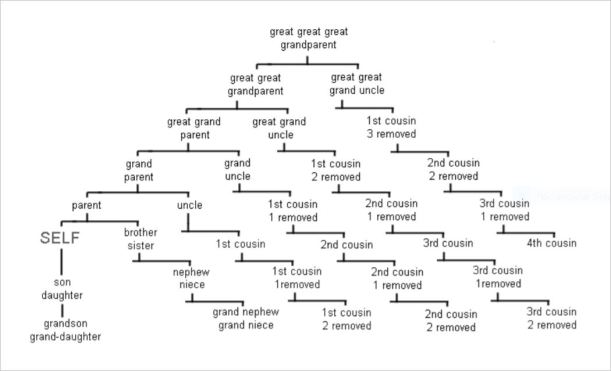
An example of a family tree. Also look online for examples of pedigree charts. Image courtesy of Margaret Houben

BY LORETTA HOUBEN

The majority of us are the descendants of immigrants. Not too far in our distant past, either our parents, grandparents or great-grandparents relocated to this wonderful country of Canada, and somehow wound up in the Renfrew-Collingwood area.

While growing up here I was aware that my mother’s side of the family lived in Oregon and my father’s side of the family lived in the Lower Mainland. While researching my dad’s past in 2011, I became obsessed with the “hows and whys” of their move from the prairies where they previously lived.

My dad was born in Spalding, Saskatchewan, but his parents both came from Wales. His father came alone to Canada in 1910, and his mother arrived in 1927 as a young woman of 19, along with her parents and siblings.

Although my grandpa was born in North Wales, and my grandma in South Wales, they met on the prairies and eventually wound up here on the West Coast.

My mom’s family are German and moved to Texas, USA in 1910 to escape political and religious turmoil in the land of Russia. They got out just before the Russian Revolution and the First World War erupted close to their farm. Due to their farming expertise, they were able to save up money and purchase acreage in Amity, Oregon.

Through a series of events, my parents met and wound up in the city of Vancouver, far removed from their farm roots. It’s fascinating how the dots connect and if you know how to research you can connect them even further back and discover clues as to how and why your ancestors chose Canada or the USA to move to.

The word genealogy means “a record or account of the ancestry and descent of a person, family, group; the study of ancestries and histories; and the descent from an original form or progenitor; lineage; ancestry.” Everyone’s genealogy will of course be different and unique, which is why genealogy is now so popular, especially with the TV show series Who Do You Think You Are in Britain and the USA.

Thanks in large part to digitized documentation being uploaded to the internet by various organizations, a search into the past is now convenient and fairly easy, although when I began my journey of genealogy research I never knew how addictive it would become! If you have patience and your family information is intact, you will be rewarded as you search.

The first thing to be done is to fill in a family tree. Begin with yourself and your birth date and place of birth. Add your parent’s names and their birth dates and place of birth. If your parents are living, ask them for the names of their parents and dates/places of birth. Hopefully you will have this much to begin with.

I keep my paper copies in binders, inserted into clear plastic sheets. I found some lovely binders at Daiso Dollar Store in Aberdeen Mall in Richmond, which already have the clear sheets inside. They are a reasonable cost of $2 each and have 40 pages. Also keep a copy of everything on your computer and remember to do weekly backups.

A home photocopier/scanner unit is a marvellous asset in your family tree hobby. A clear concise way of keeping track of the information you will be adding is a definite must in genealogy research. You need to make files and update them regularly. Each person has their own system.

There is no right or wrong way to do this. Part of the hobby of genealogy is gathering information which is turned into charts but the fun part is the stories that come to light!

Here is a chart so you can begin as soon as possible. The best goal in your family tree research is not to put off to tomorrow what can be done today! And who knows, maybe you have someone famous or well known in the branches of that tree.

In the next installment, popular genealogy websites will be discussed, as well as a local British Columbia genealogical society who host free monthly meetings at the Vancouver library central branch.

Loretta Houben is deeply involved in researching the mysteries in her paternal family tree and has been quite successful in 2013.

First published in the September 2013 issue of the Renfrew-Collingwood Community News.