This month be sure to check out Collingwood Days to experience the rich cultural and artistic diversity that our neighbourhood has to offer. Find the full schedule of events for this festival and more local activities in latest issue of the Renfrew-Collingwood Community News.
Read On! news for English learners: Celebration of Light
Do you have a local story to tell or an event to share? We’d love to hear about it! Email rccnews-editorial@cnh.bc.ca.
The deadline for the August 2024 issue is July 10.
We welcome story submissions from 300 to 400 words long. Accompanying photos must be high resolution in a jpg file at least 1 MB large and include a photo caption and the name of the photographer.
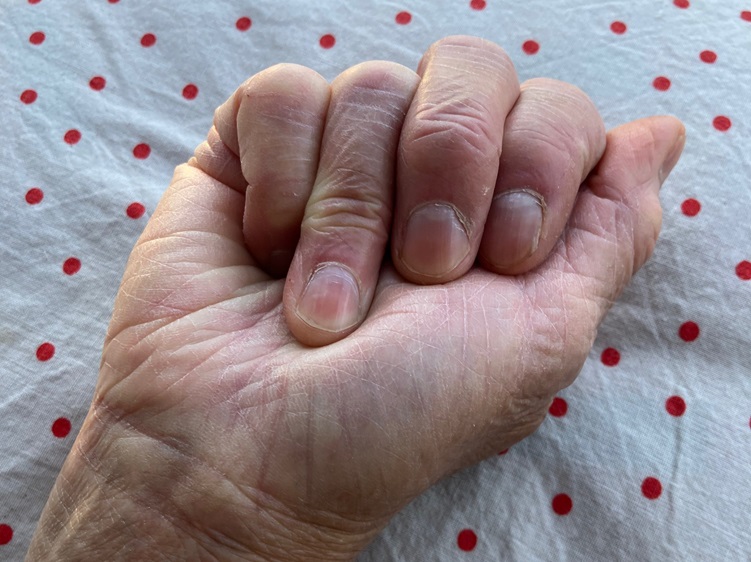
Trigger finger is an often painful condition where a finger or thumb becomes stuck in a bent position and then snaps straight. Photo courtesy of Julie Cheng
Acupuncture offers a complementary or alternative approach for managing mild to moderate symptoms of trigger finger. Acupuncture provides a non-invasive alternative to manage one’s condition effectively.
Trigger finger, medically known as stenosing flexor tenosynovitis, is a condition where a finger or thumb becomes stuck in a bent position and then snaps straight, much like pulling and releasing a trigger.
It occurs when inflammation narrows the space within the sheath surrounding the tendon in the affected finger. Individuals may experience stiffness, especially in the morning, along with a popping or clicking sensation as they move their finger. In severe cases, the finger may become locked in a bent position.
Causes and risk factors
Trigger finger commonly results from repetitive motion or forceful use of the finger or thumb.
Certain health conditions, such as rheumatoid arthritis, diabetes and gout, can increase the risk of developing trigger finger. It is also more prevalent in women and in individuals whose work or hobbies require repetitive gripping actions.
Symptoms of trigger finger
Finger stiffness, particularly in the morning
A popping or clicking sensation when moving the finger
Tenderness or a bump (nodule) at the base of the affected finger
Finger locks in a bent position and then suddenly snaps straight
Pain and swelling in the finger
Acupuncture treatment
Reducing inflammation and swelling: Acupuncture points are selected to promote circulation and reduce inflammation in the affected area. This can alleviate the pain and facilitate easier movement of the finger. Enhancing local circulation: By stimulating points along the affected area, acupuncture can enhance local circulation, helping to resolve stagnation that contributes to swelling and pain. Relaxing tendon and muscles: Acupuncture can help relax the muscles and tendons around the affected area, reducing spasms and improving mobility.
Preventive tips and lifestyle adjustments
Ergonomic adjustments: For those whose work involves repetitive gripping, making ergonomic adjustments can help reduce strain. Warm-up and stretch: Regular stretching and warming exercises for the hands and fingers can help maintain flexibility and reduce the risk of injuries. Strengthening exercises: Strengthening the muscles of the hand and fingers can also help prevent trigger finger, especially for individuals prone to this condition.
If you’re suffering from trigger finger and looking for a holistic approach to avoid invasive operations or steroidal injections, consider giving acupuncture a try. It’s safe, effective and can be tailored to your specific needs.
By addressing both the physical manifestations and the underlying energetic imbalances in energy and blood flow, acupuncture can provide significant relief and help prevent future occurrences. As always, it’s advisable to consult with a health-care provider to discuss the most customized treatment for your specific condition.
Stay healthy and move freely!
Dr. Angie Choi is a registered doctor of traditional Chinese medicine and acupuncturist. dr.angiechoi@gmail.com
At last we can look forward to the sun and the long days of summer. The latest issue of the Renfrew-Collingwood Community News gets you out and about to connect with your neighbours and community.
Do you have a local story to tell or an event to share? We’d love to hear about it! Email rccnews-editorial@cnh.bc.ca.
The deadline for the July 2024 issue is June 10.
We welcome story submissions from 300 to 400 words long. Accompanying photos must be high resolution in a jpg file at least 1 MB large and include a photo caption and the name of the photographer.



 Renfrew-Collingwood Community News